
Uncategorized
Does Solar Work in the PNW?
Does Solar Work in the Pacific Northwest Seattle Area? A Roofing Expert’s Answer At Pinnacle Roofing Professionals, we often hear…
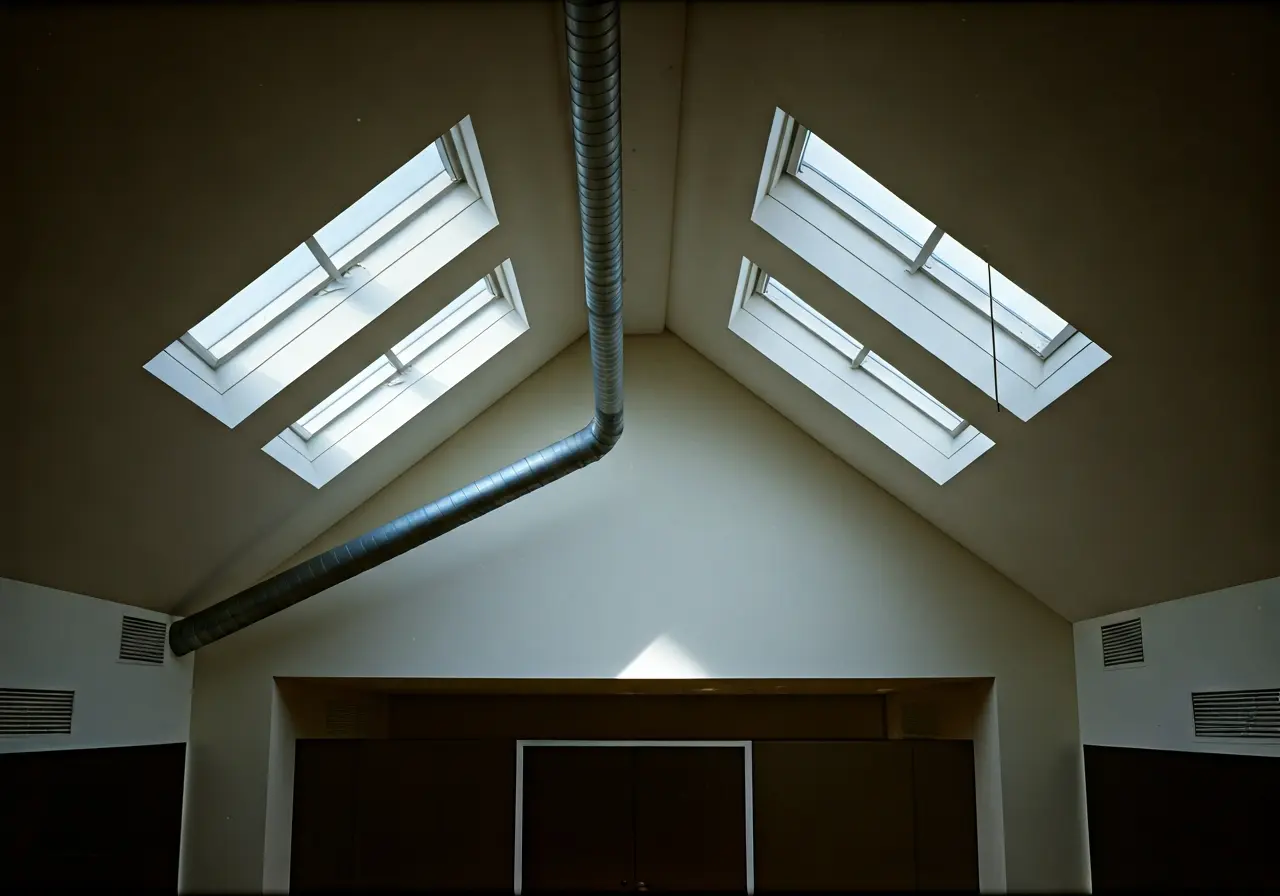
March 2, 2025Cathedral and vaulted ceilings can make a room feel more spacious and luxurious. However, ensuring these ceilings are properly ventilated is crucial for maintaining a comfortable and healthy home environment. When most homeowners think about attic ventilation, they picture the traditional walkable or crawlable attic — the kind that makes up roughly 80% of North American homes. But what about the other 20%? Homes with cathedral or vaulted ceilings also have attics, though they’re not the kind you can walk into. These unique designs require just as much attention when it comes to airflow and ventilation balance. In this blog, we’ll explore why ventilation is as essential for these ceilings as it is for walkable attics.
In cathedral or vaulted ceilings, the “attic” space is actually a narrow gap between the roof deck and the insulation layer. During construction, builders should include a 1.5-inch-wide air channel that runs from the eaves (low point) to the ridge (high point). This narrow space acts as the ventilation path, allowing air to flow continuously beneath the roof deck — helping prevent heat buildup, moisture damage, and premature roof aging.
Choosing the Right Exhaust Vent
The best option for exhaust ventilation in these ceilings is typically a ridge vent. Installed at the peak of the roof, it promotes even airflow across all rafter bays. Without a ridge vent, each bay would need its own dedicated vent (like a box vent or turbine), which isn’t as efficient and can look cluttered.
Selecting the Proper Intake Vent
For intake ventilation, homeowners have several choices:
The right option depends on your home’s design and roof structure. The goal is to ensure fresh air enters at the bottom and exits through the ridge, maintaining proper circulation.
When Re-Roofing a Cathedral Ceiling
If you’re replacing a roof on a vaulted-ceiling home, it’s essential to confirm that the original builder left space for airflow. You can check by lifting a section of roof decking. If the insulation is packed tight with no gap, baffles should be installed to recreate that crucial 1.5-inch airflow channel.
Special Considerations: Skylights and Valleys
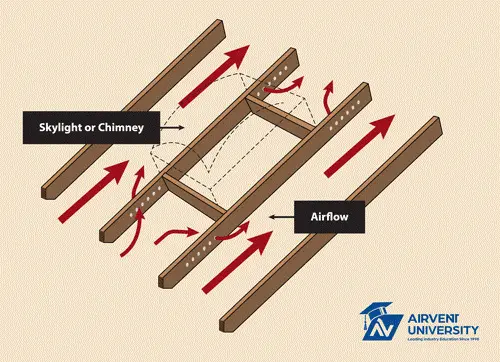
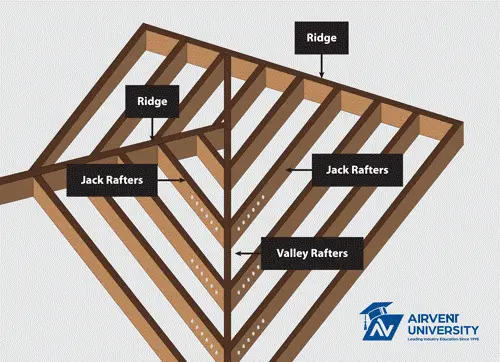
Skylights can block airflow by interrupting a rafter bay. The solution is to drill six 1-inch holes horizontally through the rafters above and below the skylight to restore air movement. The same technique can be used near roof valleys, where intake airflow may otherwise be cut off.
For safety and structure, only 2×6 rafters or larger should be drilled — and always in the center third of their length and thickness. Avoid drilling into 2×4 rafters, as they’re too small to safely modify.
The Bottom Line
Cathedral and vaulted ceilings may not have a traditional attic, but their hidden air channels are just as vital to your roof’s health. Proper ventilation helps regulate temperature, control moisture, and extend the life of your roof system.
Proper ventilation for cathedral and vaulted ceilings not only preserves the structural integrity of your home but also enhances comfort and energy efficiency. Just like a walkable attic, these majestic ceiling designs need appropriate air circulation to keep your living space healthy and inviting. So next time you admire your ceiling, remember the unseen but vital role ventilation plays.
Content adapted and paraphrased from Air Vent educational materials on attic ventilation.
Does Solar Work in the Pacific Northwest Seattle Area? A Roofing Expert’s Answer At Pinnacle Roofing Professionals, we often hear…
March 2, 2025Deciding on the best materials for roof waterproofing can seem like a daunting task. However, with the right information, it…
August 30, 2024Seattle’s rainy weather means that a well-maintained roof is essential for keeping your home protected. But how do you know…
December 2, 2025